
Putting the New Food Pyramid Into Practice: What It Really Looks Like on Your Plate
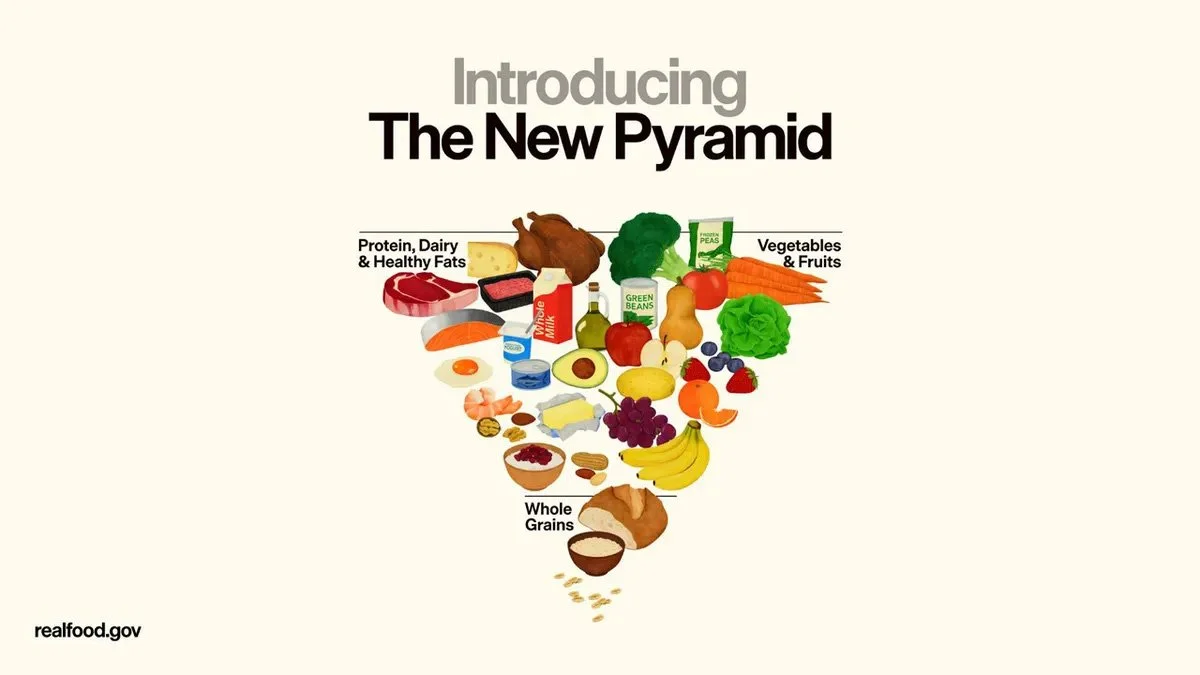
The release of the new food pyramid has sparked a renewed conversation around nutrition, and that’s something we welcome! Anytime guidance around food gets people talking, asking questions, and reflecting on their habits, it opens the door to more awareness and informed choices.
Nutrition science continues to evolve, and no single visual can capture the nuance of individual needs. That said, there are several areas where the new pyramid aligns strongly with long-standing, evidence-based principles. Let’s take a closer look at how to apply these ideas in your everyday life:
Vegetables & Fruits: The Foundation, Not the Side Dish
Vegetables and fruits should make up the largest portion of our daily intake.
The emphasis should be on variety and volume. Leafy greens, broccoli, cauliflower, peppers, zucchini, tomatoes, mushrooms, onions, and cruciferous vegetables provide fiber, antioxidants, and phytonutrients that support digestion, heart health, immune function, and inflammation regulation.
Eating the rainbow matters here. Each color delivers different benefits, and rotating vegetables throughout the week helps ensure broader nutritional coverage.
It’s also important to distinguish between:
Non‑starchy vegetables (the primary focus here)
Starchy vegetables like potatoes, peas, and corn (FYI - corn is technically a grain)
Starchy vegetables still have a place, but they fit more closely with carbohydrates toward the small end of the pyramid.
It’s also important to note that fresh is not the only nutritious option.
Frozen and canned fruits and vegetables can be just as nutritionally beneficial while being more affordable, longer-lasting, and easier to keep on hand.
When choosing frozen or canned options:
Look for no added sugars or sauces
Choose low-sodium or no-salt-added options
Whole Grains: Quality Carbohydrates Matter
The pyramid isn’t anti‑carbohydrate, it’s pro‑better carbohydrates.
At the bottom you’ll find whole grains, reinforcing the importance of choosing carbohydrates that retain their fiber and nutrients.
Whole grains such as brown rice, oats, quinoa, farro, barley, and whole‑grain bread digest more slowly, support gut health, and help regulate blood sugar compared to refined grains.
This is where simple swaps add up:
Brown or whole‑grain bread instead of white
Whole‑grain pasta instead of refined
Oats or quinoa instead of highly processed cereals
Protein: Choosing With Intention
Protein is essential for muscle health, metabolism, and satiety, but not all protein is equal, and how it’s prepared matters just as much as what you choose. Research continues to support reducing red meat intake, particularly processed and heavily charred meats, due to links with inflammation and cardiovascular risk.
That doesn’t mean red meat needs to be eliminated entirely. An occasional steak can absolutely fit into a balanced eating pattern. Rotating protein sources throughout the week supports heart health and supports overall nutrition through dietary variety.
Recommended protein choices include:
Beans and lentils
Fish and seafood
Poultry
Eggs
Tofu and plant‑based proteins
Think grilled, baked, roasted, poached, or slow-cooked rather than fried, breaded, or heavily sauced.
The Missing Visual: Portion Size
One critical element not shown in the pyramid but essential to applying it correctly is portion size.
Even whole, nutrient‑dense foods can contribute to imbalance if portions consistently exceed or don’t meet what the body needs. The National Institutes of Health (NIH) recommends a simple plate approach:
½ of the plate: non‑starchy vegetables and fruits
¼ of the plate: lean protein
¼ of the plate: whole grains or starchy vegetables
USDA MyPlate is still a great tool for serving size guidelines for Americans:
Protein: 2–3 oz lean protein (about the size of a deck of cards)
Dairy: 1 cup milk or yogurt or ~1½ oz cheese counts as a serving
Grains: 1 oz equivalent (1 slice bread, ½ cup cooked rice or pasta)
Vegetables & Fruit: 1 cup fresh or cooked vegetables
Applying the Pyramid in Real Life
Using this new food pyramid doesn’t require a total diet overhaul. Nutrition is about patterns, not perfection. It starts with small, consistent shifts:
Reduce highly processed foods
Add one new vegetable to your week
Swap refined grains for whole grains most of the time
Pay attention to portion size and fullness cues
We’d love to hear your thoughts or questions on the new food pyramid and how you’re thinking about applying it in your own life. Nutrition is an evolving conversation, and curiosity is a powerful place to start.