
Going Green Starts in Your Kitchen: A Wellness Approach to Reducing Food Waste
When people think about wellness, they often picture what to ADD: new foods, supplements, routines, or habits. But sometimes wellness begins with something simpler: paying attention to what we already have and how we use it.
One of the most powerful, and often overlooked, ways to support both personal health and planetary health is reducing food waste.
In the United States, nearly 40% of food is thrown away. That’s not just an environmental issue; it’s also a wellness issue. When we become more mindful of how we use food, we naturally become more intentional eaters, more resourceful cooks, and more connected to our wellbeing.
Wellness and Waste Are More Connected Than You Think
Food waste often happens quietly. A half-used bunch of celery wilts in the drawer. Vegetable scraps go straight into the trash. Leftovers get forgotten behind newer groceries.
When we slow down and notice what we’re throwing away, we begin to shift our mindset from convenience to care, and that shift supports wellness in meaningful ways:
Encourages mindful consumption
Reduces stress around food costs
Promotes home cooking and whole foods
Builds a deeper appreciation for nourishment
Sustainability and wellness reinforce each other.
Use the Whole Ingredient
A simple starting point is learning to use more parts of the foods you already buy.
Many vegetable scraps still hold flavor, nutrients, and purpose! Instead of discarding them, consider saving them for later use.
Keep a container or bag in your freezer and add scraps as you cook. Once your container is full, simmer the contents with water and herbs to create a homemade vegetable stock. What was once waste becomes the foundation for soups, grains, and nourishing meals.
This practice not only reduces waste but also reconnects us with the process of cooking, something strongly linked to healthier eating patterns and greater food satisfaction.
Regrowing Food
Another easy way to reduce waste is regrowing certain foods.
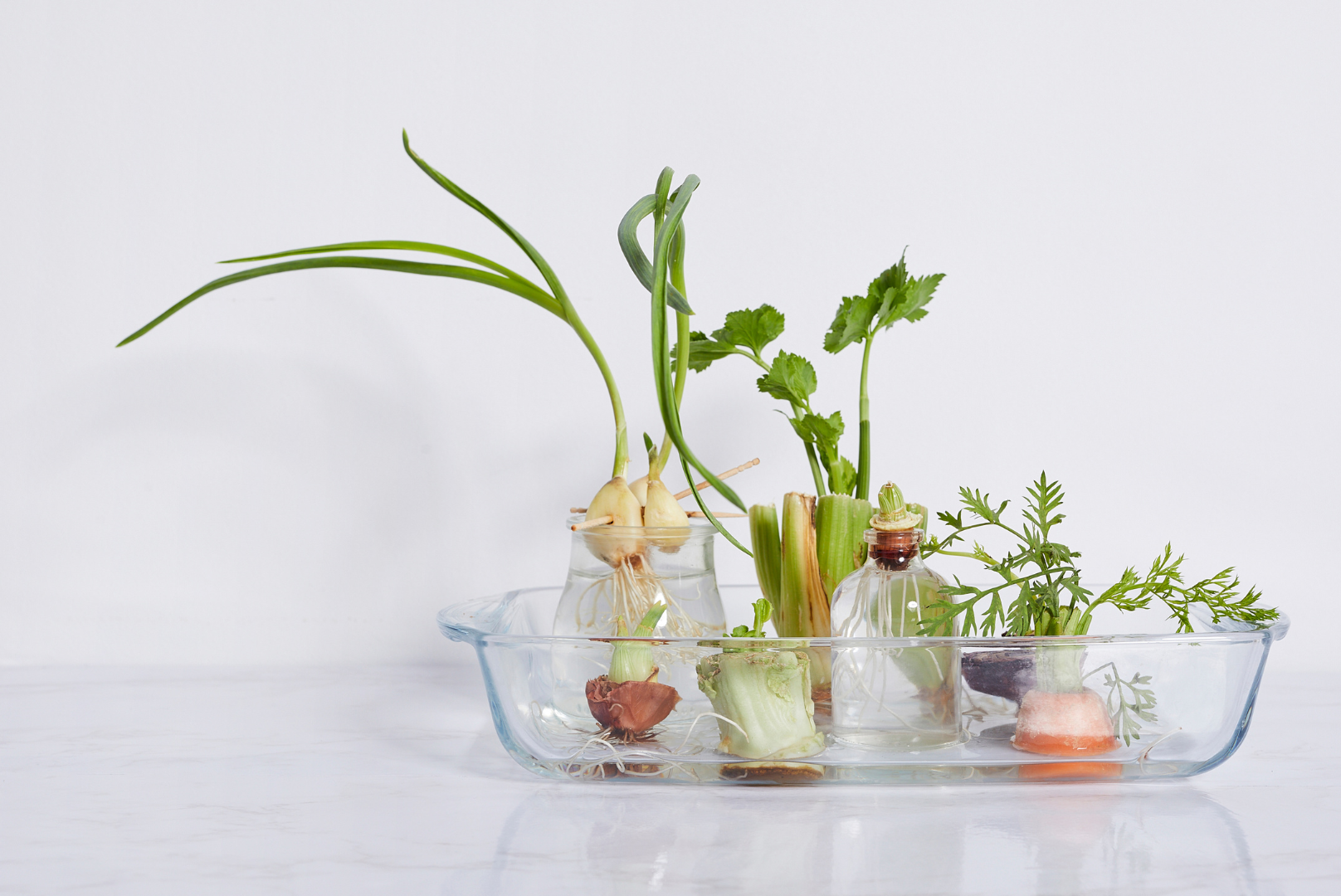
That small end of a celery bunch? Place it in a shallow dish of water, and new growth can begin within days. Green onions, lettuce bases, and some herbs can also regrow with minimal effort.
Is this going to replace your grocery shopping? No, but that’s not the point.
Regrowing food changes how we relate to it. We begin to see food as living, renewable, and valuable rather than disposable. That mindset alone can influence how thoughtfully we shop, cook, and eat.
Progress Over Perfection
Wellness isn’t about adding more pressure to daily life. It’s about creating sustainable habits that feel achievable and meaningful.
Reducing food waste is a reminder that wellness doesn’t always require buying something new. Sometimes it simply asks us to slow down, pay attention, and use what’s already in front of us.
This Earth Month, consider one small change in your kitchen. Notice what you throw away. Save one ingredient you might normally discard. Try making stock. Regrow something small.
You may find that caring for your food becomes another way of caring for yourself, and the world around you.